

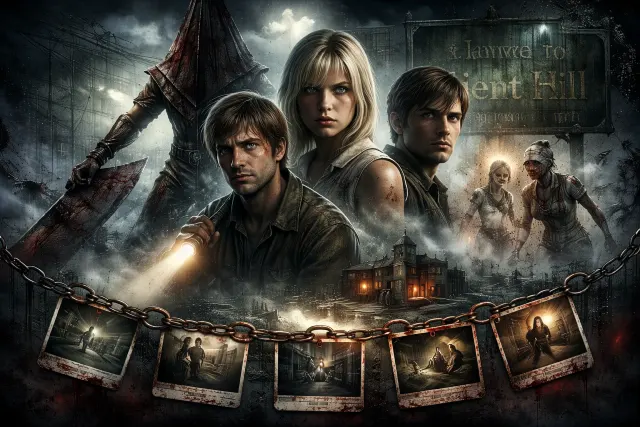
If you searched Guia Silent Hill Geekzilla, you are probably trying to understand the full story without getting trapped in endless theories, confusing timelines, or half-finished explanations. This franchise has a special talent for making people feel unsure, not because the writing is sloppy, but because it is built to feel like a dream you remember in fragments. You recall the fog, the radio static, a hallway that should not exist, and a sense that something personal is being pulled out of the characters.
This guide is written like you are talking to a real person who has played the games, watched the cutscenes, read the lore, and still wants one clean answer: what really happened, why it happened, and what it all means. In Guia Silent Hill Geekzilla, the focus is not just plot events. It is the emotional logic behind those events.
Guia Silent Hill Geekzilla explained: what this story is actually about
At its heart, Guia Silent Hill Geekzilla is about a place that reacts to people.
Not everyone enters for the same reason, and not everyone sees the same horror. That is one reason this series is so hard to summarize. One storyline looks like a cult-driven supernatural saga. Another feels like a personal psychological reckoning. Both belong in the same universe because the world changes depending on who is inside it and what they are carrying.
To keep this simple, there are two major forces most readers need to understand:
- A supernatural power tied to the town and its dark history
- A religious cult (often called The Order) that tried to control that power through rituals
Some entries lean heavily into the cult storyline. Others use the location more like a mirror that reflects guilt, grief, fear, and trauma. When fans argue about what the franchise is “really about,” they are usually describing different angles of the same concept: horror that becomes personal.
The origin tragedy that shaped everything
Every strong recap in Guia Silent Hill Geekzilla begins with the same turning point: a child named Alessa and a ritual meant to birth a god.
The cult believed they could bring about salvation through a supernatural entity. Their plan involved using Alessa as a vessel. The ritual did not go as planned and caused severe physical and psychological damage. This is the moment where the story’s “rules” are basically born. Pain and belief become powerful enough to twist reality.
You do not need to memorize every ritual phrase or every cult hierarchy member to get the big picture. What you need is the emotional cause-and-effect:
- A child is abused in the name of faith
- Trauma becomes supernatural fuel
- Reality begins to bend, tear, and overlap with a nightmare state
- The cult’s failure does not end the story, it stains the world permanently
From this point onward, the horror is not just a monster problem. It is a consequence problem. People keep returning to the same nightmare because the original wound was never allowed to heal.
Why the world feels like it is “splitting”
One of the most confusing parts for new readers is the way the environment changes. Streets look normal one moment, then shift into a rusted, decayed version where walls sweat, metal grates replace floors, and everything feels like it is breathing.
In Guia Silent Hill Geekzilla, here is the simple explanation:
- There is a surface reality where things look almost normal
- There is a nightmare layer where inner suffering leaks into the physical world
- The shift happens when the story wants to force a character closer to truth
That is why the horror feels intelligent. The world is not random. It escalates when the character is close to something they are avoiding.
Guia Silent Hill Geekzilla story arc 1: the father who refuses to give up
The first major storyline is built around a parent searching for a missing child.
A man arrives near the town with his daughter, gets into an accident, wakes up, and realizes she is gone. At first, it feels like a simple missing-person situation. But quickly, it becomes clear the disappearance is tied to deeper forces. The cult is active, the world is unstable, and the child’s identity is connected to the origin tragedy.
What Guia Silent Hill Geekzilla this arc establishes
This storyline matters because it creates the foundation for everything that follows:
- The town can trap you and disorient you
- You can lose time and lose reality
- Monsters are often symbolic, not just biological
- The cult is not background decoration, it is a driving engine of events
- A child can be the key to a ritual and a key to the town’s transformation
It is also the arc that gives the franchise its first emotional anchor: a parent’s desperation. That emotional realism is why the story holds up. Even if you do not understand every supernatural detail, you understand the motive: find the child.
Why the ending echoes forward of Guia Silent Hill Geekzilla
The ending of this arc sets up later events through a continuation of identity. Something is left behind, something is reborn, and the cult’s obsession is not finished. That is why later entries do not feel like separate horror tales. They feel like consequences catching up.
Guia Silent Hill Geekzilla story arc 2: the man called back by guilt
This is the most famous story because it is the most human.
A man receives a letter from his wife, even though she is believed to be dead. The letter calls him back to the town. He goes because part of him wants it to be true, and part of him needs it to be true. Once he arrives, the town does what it does best: it builds a nightmare that matches the person inside it.
This arc becomes unforgettable because it does not feel like a traditional horror plot. It feels like a confession slowly forming.
The real reason this arc hits so hard
It is not the twist itself. It is the emotional weight behind the twist.
The story is built on avoidance. The character is living in denial, and the environment keeps pushing him toward the truth. The enemies feel less like external threats and more like emotional pressure made physical.
What the iconic executioner-like creature represents
One of the most recognizable enemies in the entire franchise is an executioner-style figure. People often ask why it exists.
In Guia Silent Hill Geekzilla, the clean explanation is this:
- It functions like a punishment symbol
- It represents judgment, guilt, and the need to face consequences
- It appears with purpose, not randomly
- It is terrifying because it feels like a verdict, not a monster
That is why it stays in people’s minds. It is not just scary. It is meaningful.
Why the endings matter without turning into a theory war
Multiple endings exist, but the important part is what they reflect: mindset.
Rather than being “pick the correct ending,” the story reads your behavior like a psychological profile. It answers a deeper question: is the character escaping truth, accepting it, or collapsing under it?
That makes the story replayable, but it also makes it emotionally sticky. People replay not to collect endings, but to understand what the game is saying about the character.
Guia Silent Hill Geekzilla story arc 3: identity, control, and being hunted
Another major storyline focuses on a young woman who is pulled into events because of who she is, not what she did.
She starts out living an ordinary life. Then things begin to fracture. She is followed, threatened, manipulated, and eventually forced to confront the truth: her identity is tied to the cult’s original failure, and the cult wants to use her as a vessel to finish what was started long ago.
Why this arc feels different
This arc does not rely on mystery alone. It relies on violation.
The horror here is not just monsters. It is the feeling of being claimed by someone else’s belief. It is the fear of losing your body, your future, and your autonomy to people who think their “faith” gives them permission.
That is why this storyline is so disturbing even when nothing jumps out. It is not just frightening. It is oppressive.
What it contributes to the full franchise story
This arc completes the earlier thread and shows that the cult’s obsession is generational. They do not stop because time passes. They stop only if they are stopped.
It also strengthens the franchise’s bigger message:
Some horror comes from the supernatural. Some comes from humans who justify cruelty through ideology.
When the horror spreads beyond one location
Later stories expand the concept further. The nightmare no longer needs to be confined to one set of streets. It can be pulled into apartments, rooms, and personal spaces. It can attach to people, memories, rituals, and obsession.
This is important because it changes the reading:
- The town is not only a physical place
- The phenomenon can act like an infection of the mind and spirit
- Safety is not guaranteed even far away
This evolution is also why modern news about new projects excites fans. A “return” does not have to mean returning to the exact same streets. It can mean returning to the same kind of psychological and spiritual logic.
A clear timeline inside Guia Silent Hill Geekzilla
Here is a simplified timeline that keeps the story understandable without drowning you in side entries:
| Stage | What happens | Why it matters |
|---|---|---|
| Origin tragedy | Cult ritual harms Alessa and warps reality | Creates the franchise’s nightmare rules |
| Father arc | A parent searches for a missing child | Establishes cult stakes and identity continuity |
| Guilt arc | A man is drawn in by a letter and faces inner truth | Defines the psychological reputation |
| Identity arc | A young woman is hunted as a vessel | Resolves major cult thread and raises emotional stakes |
| Spread arc | Horror reaches beyond the town | Expands the concept into a broader phenomenon |
If you keep this structure in your head, the story becomes far less confusing.
Why “fog” is more than atmosphere
People talk about fog like it is just a visual style choice. It is not.
Fog works as a storytelling tool because it represents uncertainty. It hides boundaries. It makes distance feel wrong. It makes the world feel incomplete. When the environment is foggy, you are not only scared of what is in front of you. You are scared of what you cannot confirm.
In Guia Silent Hill Geekzilla, fog symbolizes:
- denial
- uncertainty
- emotional suppression
- fear of seeing what is actually there

Then, when the world shifts into the nightmare layer, that suppression breaks. The story stops being subtle and becomes raw.
What makes this franchise feel different from typical horror games
A lot of horror games are built on survival tactics. Avoid the monster. Save ammo. Solve puzzles. Those are all present here too, but they are not the emotional reason people remember it.
What people remember is how the horror feels customized.
Here are the reasons this storytelling approach stands out:
- The environment reflects the character’s internal state
- Monsters often feel symbolic and personal
- The narrative rewards attention rather than speed
- The scariest moments are usually quiet, not loud
- The story treats guilt, grief, and trauma like real forces
That is why the fandom is still alive. People do not just “finish” these stories. They chew on them.
Common questions people ask after finishing an entry
Does everything connect, or are they separate stories?
Both. Some arcs directly connect, especially the origin tragedy and the identity arc that follows it. Others are more self-contained, but still follow the same world rules where inner suffering can shape the nightmare.
Why do different characters experience different horrors?
Because the horror is often reflective. The environment can manifest based on fear, guilt, trauma, and memory. That is why two people can be in the same place and not experience it the same way.
Is the cult the main villain?
The cult is a major villain in the myth-heavy arcs, but the “main villain” shifts depending on the story. In the guilt-focused arc, the villain is often the character’s own denial and choices. In the identity arc, the villain is control and exploitation.
Why are endings sometimes ambiguous?
Because the story is written like psychological horror, not like a detective report. Ambiguity is part of the experience. It mirrors how people avoid truth, reinterpret memories, and protect themselves emotionally.
Guia Silent Hill Geekzilla: what happened, in one clear answer
If you want one clean sentence that captures the whole franchise, here it is:
A place corrupted by a ritual and trauma became a mirror for human suffering, and anyone who enters is forced to confront what they hide, whether that is guilt, grief, fear, or obsession.
That is why the horror feels different from typical monster stories. The fear is not only what is chasing you. The fear is what the story is revealing about the person being chased.
How to understand the story without overthinking it
Some readers get stuck because they think they need to “solve” everything. You do not.
Try this instead:
- Focus on what the character is emotionally avoiding
- Notice what the environment pushes them toward
- Treat monsters like symbols first, threats second
- Read endings as psychological outcomes, not trivia answers
- Remember that the origin tragedy created the rules, everything else is consequences
If you approach it this way, the plot stops feeling confusing and starts feeling intentional.
In broader horror discussions, this style is often grouped under psychological horror, where the fear is built through inner conflict, perception, and emotional pressure rather than constant action.
Why Guia Silent Hill Geekzilla is trending in story and news categories
The franchise keeps returning to headlines because modern projects revive interest, remakes bring older narratives to new audiences, and upcoming titles create discussion about how the lore might expand.
When a remake happens, people re-ask the same questions:
- What is the correct timeline?
- Which ending matters most?
- What did the town represent for this character?
- How much is supernatural and how much is psychological?
That cycle is exactly why story recaps like Guia Silent Hill Geekzilla stay evergreen in entertainment news and gaming culture.
Conclusion
The reason Guia Silent Hill Geekzilla matters is that it gives you the story in a way that feels human, not academic. This franchise does not scare people only with monsters. It scares them with meaning. It turns grief into hallways, guilt into footsteps, and denial into a world that refuses to stay stable.
When you look at the entire timeline, what happened is not a random chain of horror events. It is a long echo of one original tragedy, followed by a series of people being forced to face their own darkness in different forms. Some stories are driven by cult obsession. Some are driven by personal collapse. Together, they form a franchise that still feels emotionally heavy decades later.