

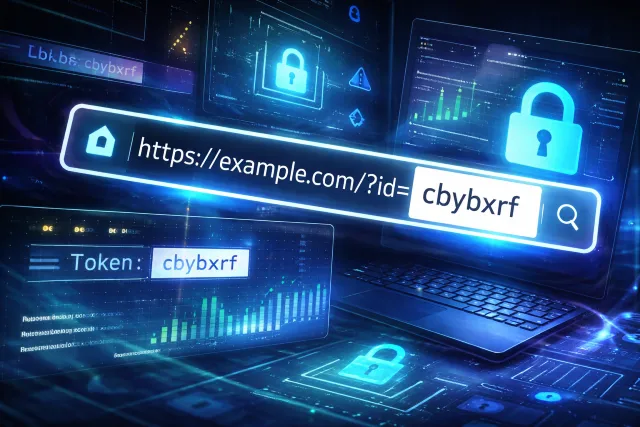
If you searched Cbybxrf and ended up here, chances are you saw it somewhere strange. Maybe in a URL, a file name, a comment thread, a system log, a tag, or a random-looking string that felt too specific to be an accident. And now you’re wondering the same thing thousands of other people are wondering: what is Cbybxrf, and why does it keep showing up in conversations that sound like cybersecurity?
Let’s be clear from the start. Cbybxrf does not have a single official, widely accepted definition in mainstream cybersecurity documentation. What it does have is something the internet is very good at creating: speculation, theories, repeated keyword reuse, and “meaning” that forms through context. In this article, we’ll break down what people think Cbybxrf is used for, why it gets associated with cyber topics, and how to interpret it safely if you encounter it in the wild.
What is Cbybxrf?
The simplest honest answer is: Cbybxrf is a string that looks like an identifier.
Across the web, you’ll find many blog-style explainers describing Cbybxrf as everything from a “digital framework” to a “mysterious tech concept” to a unique brand keyword. A few sites frame it as a username-like identifier with no dictionary meaning.
The important point for readers is this: in real technical systems, random-looking strings are often normal. Security tools, databases, authentication systems, and web apps generate strings constantly. They can represent tokens, IDs, hashes, short codes, tracking parameters, or placeholders.
So when people connect Cbybxrf to cybersecurity, it’s often because it resembles the kinds of strings that show up in security-related contexts.
Why would Cbybxrf be linked with cybersecurity at all?
Cybersecurity is broadly the practice of protecting systems, networks, and data from attacks, misuse, and failures.
In that world, you see a lot of “nonsense-looking” strings because machines prefer identifiers that are:
- Unique
- Easy to generate
- Hard to guess
- Not human language
That overlap is why a keyword like Cbybxrf can trigger cybersecurity assumptions. People see it and think:
- “Is this encrypted?”
- “Is this a tracking token?”
- “Is this a malware indicator?”
- “Is this a hidden code?”
Some online pieces specifically mention “digital obfuscation” and opaque identifiers as a likely explanation for strings like cbybxrf appearing in URLs and logs.
The most common theories: what people think Cbybxrf is used for
Below are the most frequent, realistic interpretations behind the curiosity. Some are more credible than others, but all of them show why people connect Cbybxrf with cybersecurity.
1) Cbybxrf as an opaque identifier in URLs
One of the most believable “boring but true” explanations is that Cbybxrf is used as an opaque identifier, meaning a value that identifies something inside a system, but is not meant to be meaningful to humans.
Think of:
?id=cbybxrf/share/cbybxrftoken=cbybxrf
There’s even published research discussing how many URL query strings are uninteresting opaque identifiers, while others can reveal sensitive information depending on what they contain.
This is also where security concerns come in. OWASP warns that putting sensitive data in URLs (query strings) can expose information such as tokens or session details.
So if someone sees a string like Cbybxrf in a URL parameter, they might assume it’s sensitive, even if it is just a harmless internal ID.
How this connects to cybersecurity:
People are trained to be suspicious of tokens and IDs in URLs because exposed tokens can sometimes be misused.
2) Cbybxrf as a session token or authentication artifact
Another theory is that Cbybxrf represents a session-related value. In real systems, session IDs and tokens should be generated using cryptographically secure random number generators.
OWASP also discusses the risk when session variables are exposed, because session tokens can allow impersonation if stolen.
Now, to be accurate: there’s no proof that Cbybxrf is a session token in any specific product. But it “looks like” the kind of short, random string people associate with authentication.
How this connects to cybersecurity:
When people see a short token-looking value, they often think “login/session” first, because that’s where stolen values can cause real damage.
3) Cbybxrf as a tracking or analytics parameter
Tracking parameters are everywhere. Marketing platforms, analytics tools, and ad networks generate IDs that look random.
So if someone notices Cbybxrf repeatedly across shared links or web pages, they may assume it is:
- A campaign tag
- A click identifier
- A referral marker
- A shortened internal routing value
This theory fits a common pattern described in privacy and URL research: many query strings act as system identifiers, and only some reveal personal or sensitive info.
How this connects to cybersecurity:
Tracking IDs are not automatically malicious, but they can raise privacy concerns, and security-minded users pay attention to anything that looks like persistent identification.
4) Cbybxrf as “obfuscation” or light encoding
A big reason Cbybxrf gets treated like a cipher is that people love decoding. Some posts mention ROT13 as a possible decoding angle.
ROT13 is a simple letter substitution (shift by 13) and is widely described as offering virtually no cryptographic security.
If someone tries ROT13 on “cbybxrf,” they get “polokeh…” (not a meaningful English word), which reinforces the mystery. That leads to more guessing, more posts, and more searches.
How this connects to cybersecurity:
Encoding and obfuscation show up in malware, phishing, and data hiding. But also in harmless places, like spoilers, puzzles, and playful internet culture. ROT13 specifically is more “obscure” than “secure.”
5) Cbybxrf as a placeholder string or test value
Developers frequently use placeholder strings for testing. In logs, temporary configs, prototypes, or debugging output, you might see unusual strings that are never meant to be public.
This is less exciting, but common. If a placeholder accidentally becomes public (say, copied into a template or published in a post), it can spread as a “mysterious keyword.”
How this connects to cybersecurity:
Security folks pay attention to accidental leakage because test values sometimes reveal patterns, endpoints, or misconfigurations.
6) Cbybxrf as a username, handle, or brand identifier
Several sources describe Cbybxrf as a distinctive handle or a non-dictionary keyword that functions well as a unique identity online.
This matters because cybersecurity conversations often overlap with:
- account safety
- impersonation
- brand protection
- domain lookalikes
- identity verification
A unique string can be used intentionally to avoid name collisions and reduce impersonation risk.
How this connects to cybersecurity:
Digital identity is part of security. Unique identifiers can be defensive (harder to copy) or suspicious (harder to interpret).
7) Cbybxrf as a “malware indicator” rumor
This is one of the most common internet jumps: “I saw a weird string, maybe it’s a virus.” People may paste strings into forums or search engines when investigating suspicious behavior.
But here’s the careful truth: reliable threat intel usually ties indicators to specific families, hashes, domains, or behaviors. “Cbybxrf” by itself does not appear in mainstream, authoritative threat advisories in an obvious, verifiable way from the sources we reviewed.
So while people might suspect it, you should treat “Cbybxrf equals malware” as unproven unless you see it connected to a real indicator context (a file hash, a known domain, a security vendor report, or a confirmed incident report).
How this connects to cybersecurity:
Suspicion is normal. Certainty requires evidence.

Where Cbybxrf might realistically appear
If you want to interpret Cbybxrf safely, focus on where you saw it. Context matters more than the string.
Common places random identifiers appear
- URLs (query parameters, share links)
- password reset links
- invite links
- download links
- app logs and error messages
- database record IDs
- API keys and tokens (often longer than Cbybxrf)
- shortened internal references
CyberChef’s guides, for example, highlight why decoding URL-encoded values is useful for analyzing traffic and debugging web app behavior, which is often where people start when investigating strange strings.
A practical “is this dangerous?” checklist
If you encounter Cbybxrf, here’s how people in security typically reason without panic.
Low-risk signs
- It appears as part of a normal-looking share link on a reputable site
- It changes every time (suggesting a random ID)
- It’s tied to content you intentionally accessed
- There’s no suspicious download, redirect, or permission prompt
Higher-risk signs
- It appears in a link from an unknown sender
- Clicking leads to a login prompt you weren’t expecting
- The URL domain is misspelled or unfamiliar
- Your browser warns about deceptive or unsafe pages
- The string appears alongside suspicious file downloads or macros
OWASP’s warnings about sensitive information in URL query strings are a good reminder that even “normal-looking” links can carry risky values if they contain tokens or credentials.
Why content about Cbybxrf can be misleading
If you search Cbybxrf, you’ll notice many articles confidently describing it as a “framework,” “system,” or “technology.”
Here’s the reality check: these descriptions are usually not backed by:
- standards bodies (like NIST)
- major vendors (Microsoft, Google, Apple)
- peer-reviewed security research
- product documentation
That doesn’t mean every mention is false. It means you should separate “internet explainers” from “verifiable technical sources.”
A useful mental model:
- Treat Cbybxrf as a label that might represent many things
- Trust context, not confident storytelling
How to write about Cbybxrf in a cybersecurity article without overclaiming
Since your title is “Cbybxrf and Cybersecurity: What People Think It’s Used For,” you’re already positioned the right way. You’re not claiming “Cbybxrf is definitively X.” You’re describing perceptions, theories, and patterns.
A safe, reader-friendly approach is:
- explain what strings like this often represent in real systems
- describe why people associate them with security
- show how to evaluate risk by context
- avoid naming it a real product unless proven
And if you’re wondering why vague terms like this spread so fast, a lot of it comes down to the way online communities create meaning through repetition, memes, and internet slang.
That’s exactly the kind of tech trend decoding content audiences enjoy because it’s practical, not hype.
Conclusion
Cbybxrf is interesting because it sits at the intersection of internet curiosity and real technical patterns. In cybersecurity-adjacent spaces, people often interpret it as an identifier, token, tracking parameter, or a lightly obfuscated string because that’s what similar-looking values usually are. OWASP’s guidance on URL exposure and session handling shows why people are trained to take random-looking strings seriously, especially when they show up in links or authentication flows.
At the same time, there’s no single official source that defines Cbybxrf as one specific cybersecurity tool or standard. That’s why the most responsible way to treat it is simple: focus on where you saw it, what it was attached to, and what happened next. If you’re seeing it in daily browsing, it’s likely an identifier. If you’re seeing it in suspicious messages or unexpected redirects, treat it like any other potential phishing bait and handle it cautiously.