

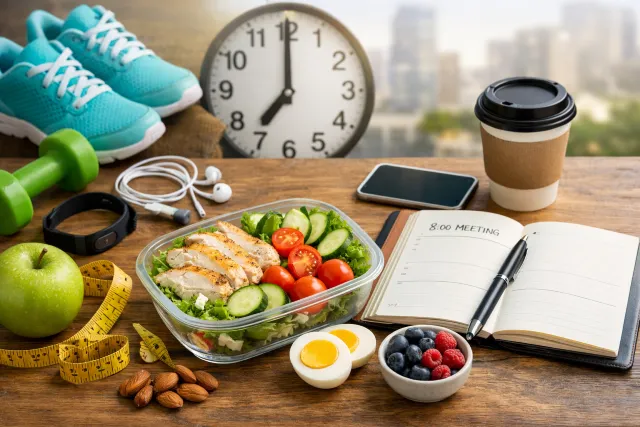
If you’ve ever tried to “get serious” about weight loss on a Monday morning, only to watch the plan fall apart by Wednesday afternoon, you’re not lazy. You’re busy. And most popular plans are built for someone with extra time, extra energy, and a life that doesn’t include meetings, family responsibilities, errands, and stress eating because you forgot lunch.
The truth is, the best weight loss program for busy people doesn’t feel like a second job. It fits into your normal routine, it’s built on repeatable habits, and it aims for steady progress you can actually keep. Health authorities consistently point out that gradual weight loss (about 1 to 2 pounds per week) is more likely to last than rapid drops that rebound fast.
This article breaks down the simple, realistic habits that work when your calendar is packed, your willpower is limited, and your goal is to lose weight without turning your life upside down.
What “best weight loss program” really means when you’re busy
Let’s define it in a way that makes sense for real life.
A busy-friendly weight loss program should be:
- Simple enough to repeat on your worst weeks, not just your best weeks
- Flexible so you can eat normal food, attend events, and travel
- Habit-based, because busy people can’t micromanage everything
- Grounded in evidence, not hype
- Sustainable, because keeping weight off matters more than losing it quickly
A common trap is thinking you need a perfect plan. You don’t. You need a plan that works at 70 to 80 percent effort, consistently.
The busy person’s fat-loss foundation (no extremes required)
Weight loss still comes down to creating an energy deficit over time, but your body adapts, and the process is not as linear as the old “3,500 calories per pound” rule suggests. The best weight loss program for show weight change has a time course, and small daily changes add up gradually.
So instead of chasing dramatic daily results, focus on building a weekly routine that quietly pulls your average intake down and your activity up.
Here’s the foundation that tends to work best:
- Protein-forward meals to stay full longer
- High-volume foods (fiber, vegetables, soups) that help you eat less without feeling punished
- Daily movement that doesn’t require a gym
- Strength training (even minimal) to protect muscle and metabolism
- Sleep and stress habits that reduce cravings and “snack drift”
Now let’s turn that into habits you can actually do.
Best weight loss program habit 1: Build a “default breakfast” and “default lunch”
Decision fatigue is real. The busier you are, the more likely you are to grab whatever is fast, and “fast” usually means calorie-dense and low in protein.
Create two default meals you can repeat on weekdays:
- One default breakfast
- One default lunch
Keep them boring on purpose. Boring meals reduce decision stress and stop you from negotiating with yourself when you’re hungry.
Examples (mix and match):
- Greek yogurt + fruit + nuts
- Eggs + whole-grain toast + a piece of fruit
- Protein smoothie with milk or yogurt + banana + berries
- Chicken or tuna wrap + side salad
- Rice bowl with lean protein + frozen veggies + sauce you like
You’ll notice I didn’t say “perfect.” The goal is dependable.
Quick tip for busy schedules
If mornings are chaos, keep breakfast “grab-and-go” and protein-heavy. When you start the day with more protein, many people find it easier to control hunger later.
Habit 2: Use the “protein first” rule at every meal
You don’t need to track every calorie to lose weight. But you do need a few guardrails, and this one is powerful.
Protein first means you build your plate starting with a protein source, then add fiber and carbs around it.
Busy-friendly protein options:
- Rotisserie chicken
- Eggs
- Canned tuna or salmon
- Greek yogurt
- Cottage cheese
- Lean ground meat
- Tofu or tempeh
- Lentils and beans (great if you can handle them well)
Why it works: protein is filling, supports muscle retention during weight loss, and reduces the “I’m starving” feeling that triggers overeating.
If you do only one nutrition habit from this article, do this one.
Habit 3: Make “two snacks” your daily maximum (most days)
Snacking is not the enemy. Unplanned snacking is.
A simple boundary for busy people:
- Plan one afternoon snack
- Plan one optional evening snack
- Most other snacking is just stress, boredom, or proximity to food
Busy-friendly planned snacks:
- Apple + peanut butter
- Greek yogurt
- Protein bar (check sugar and protein, but don’t overthink it)
- Jerky + fruit
- Nuts + sparkling water
- Hummus + veggies
This keeps your day structured without turning it into a rigid diet.
Habit 4: Turn your home into a “low-friction” environment
Your environment often beats willpower. If the easiest thing to grab is chips, you’ll grab chips. If the easiest thing to grab is Greek yogurt, you’ll grab Greek yogurt.
Make the helpful choice the easy choice:
- Put protein and produce at eye level in the fridge
- Keep a bowl of fruit visible
- Pre-portion snacks if you tend to eat from the bag
- Store treat foods out of sight, not banned, just not always visible
This sounds basic, but it’s one of the fastest ways to reduce “accidental calories” without feeling like you’re dieting.
Habit 5: Walk daily, but do it in “minimum effective doses”
Many busy people fail at exercise because they aim too high. They plan 60-minute workouts, miss two days, then give up.
Instead, use minimum effective doses:
- 10 minutes after lunch
- 10 minutes after dinner
- 5-minute “movement breaks” between tasks
Those short bouts add up. Public health guidance emphasizes regular physical activity as part of achieving and maintaining a healthy weight, especially paired with eating changes.
The “phone call walk” trick
If you take calls, walk during them. Even pacing counts. It’s not glamorous, but it works.
Habit 6: Strength train twice a week (20 to 30 minutes)
If you’re busy, strength training is your friend because it protects muscle while you lose fat. Muscle helps keep your metabolism healthier during a deficit.
You only need two sessions a week to start.
A simple home routine:
- Squats or chair squats
- Push-ups (wall or knee is fine)
- Rows (band or dumbbells)
- Hip hinge (Romanian deadlift with dumbbells, or glute bridges)
- Plank or dead bug
Do 2 to 3 sets per move. Keep it simple. Progress slowly.
If time is tight, do one full-body circuit twice per week. Consistency matters more than perfection.
Habit 7: Use tracking, but keep it lightweight
Tracking helps because it gives feedback. Research summaries for the public often highlight that people who track behaviors tend to do better with weight loss and maintenance.
But tracking does not have to mean logging every gram.
Busy-friendly tracking options:
- Weigh yourself 3 to 4 mornings per week and watch the trend
- Track steps
- Take waist measurements every 2 weeks
- Track protein servings (not calories)
- Take progress photos monthly (same lighting)
Pick one method you can actually do when life is hectic.
Habit 8: Sleep like it matters (because it does)
When you’re short on sleep, hunger and cravings usually get louder, and your decision-making gets worse. Sleep is not a “bonus habit,” it’s part of your program.
Evidence links short sleep with higher odds of overweight and obesity, and many summaries discuss sleep loss as a risk factor.
Busy-person sleep upgrades:
- Set a “shut down” alarm 45 minutes before bed
- Charge your phone outside the bed if possible
- Keep the bedroom cool and dark
- Reduce caffeine after early afternoon if it affects you
If you can’t increase total sleep, improve consistency. A stable sleep schedule often helps appetite control.
Habit 9: Plan for chaos days (because they’re guaranteed)
Most people don’t fail on normal days. They fail on chaotic days.
A chaotic day plan includes:
- A backup breakfast (protein bar + fruit)
- A backup lunch (pre-made salad + protein add-on, or a simple sandwich)
- A “fast food order” you already decided on
- A 10-minute walk, even if nothing else happens
This is how busy people win. You stop relying on motivation and start relying on systems.
A simple weekly schedule you can copy
Here’s what a realistic week could look like if you’re balancing work, family, and life.

Weekday basics
- Default breakfast and lunch
- Protein-first at meals
- One planned snack
- 20 minutes total walking split into small chunks
- Lights out routine most nights
Two strength days
- Tuesday: 25 minutes full body
- Friday: 25 minutes full body
One flexible meal
- One meal out or social meal where you don’t “diet”
- You just use portion awareness and protein-first
This structure is flexible, not fragile.
Table: Busy-friendly habits that deliver the biggest return
| Habit | Time cost | Why it works | Busy-friendly version |
|---|---|---|---|
| Default breakfast/lunch | 0 extra once set | Reduces decision fatigue | Rotate 2 meals weekly |
| Protein first | None | Improves fullness, reduces overeating | Protein + produce, then carbs |
| Planned snacks | 2 minutes | Stops mindless grazing | Pre-pack 1 to 2 options |
| Daily walking | 10 to 20 minutes | Boosts calorie burn and energy | Walk on calls or after meals |
| Strength training 2x | 40 to 60 min/week | Preserves muscle, improves body comp | Short full-body circuits |
| Lightweight tracking | 1 to 3 minutes | Keeps you honest and consistent | Trend weight or steps |
What to do when weight loss stalls (common and normal)
Plateaus happen. Bodies adapt, schedules change, stress rises. Before you panic, check the most common causes:
- Portion creep
- Nuts, oils, sauces, and “healthy snacks” can quietly add up.
- Weekend rebound
- Many people do great Monday to Friday, then erase progress over the weekend.
- Sleep debt
- Cravings rise, patience drops.
- Less movement without noticing
- Stress often reduces daily steps.
A practical reset:
- Add 10 minutes walking per day
- Tighten snacks to one planned snack
- Keep treats, but portion them
- Focus on protein and produce for 7 days
- Recheck your trend after two weeks, not two days
Common questions busy people ask
How fast should I lose weight?
A safe, realistic pace is often described as about 1 to 2 pounds per week, and gradual loss is more likely to stay off.
Do I need to cut carbs to lose weight?
Not necessarily. Many people lose weight with balanced carbs. What matters more is your overall intake, protein, fiber, and consistency.
Is walking enough?
Walking can be enough to start, especially when paired with eating changes. For best long-term results, add basic strength training so you keep muscle while losing fat.
What if I’m too busy to meal prep?
Meal prep is helpful, but it’s not mandatory. Use “assemble meals” instead:
- Pre-cooked protein (rotisserie chicken, eggs, tuna)
- Frozen vegetables
- Microwavable rice or potatoes
- Simple sauces
You can build a solid dinner in 10 minutes.
How do I handle eating out?
Use a simple approach:
- Order a protein-centered meal
- Add vegetables if possible
- Choose one: appetizer, drink, or dessert
- Stop when you’re satisfied, not stuffed
A realistic scenario: how this looks in real life
Let’s say you work full-time, commute, and have family responsibilities.
Your day might look like this:
- Breakfast: Greek yogurt + fruit
- Lunch: Chicken wrap + salad
- Snack: Protein bar at 3 pm
- Dinner: Rice bowl with lean protein + frozen veggies
- Movement: 10-minute walk after lunch, 10-minute walk after dinner
- Strength: Two short sessions a week, done at home
No perfect macros. No daily gym. No “detox.” Just repeatable habits.
Over time, small changes can create meaningful results. Models of weight change emphasize that the body responds over months, not days, and that gradual progress is expected.
Conclusion: The best weight loss program is the one you can repeat
If you’re busy, you don’t need a complicated plan. You need a few habits that run in the background of your life.
The best weight loss program for busy people is built on:
- default meals that reduce decision fatigue
- protein-first plates that keep you full
- planned snacks that prevent grazing
- short walks that add up
- two weekly strength sessions to protect muscle
- simple tracking so you don’t drift
- better sleep to reduce cravings and stress eating
And if you want one mindset shift that makes everything easier, it’s this: aim for steady, livable progress. You’re building a lifestyle, not surviving a diet.
In the long run, consistency wins because it keeps your weekly habits aligned with energy balance without demanding perfection. Here’s a helpful overview of energy balance if you want the bigger picture.