

If you’ve seen the word Felixing popping up in comments, captions, usernames, or even random “what does this mean?” searches, you’re not alone. Felixing is one of those internet-born terms that feels familiar and mysterious at the same time. It looks like a real word, sounds like a vibe, and somehow fits into totally different conversations, from K-pop fandom spaces to productivity talk and meme culture.
In this article, we’re breaking down what Felixing means in plain English, why it’s trending, and how people are using it online right now. You’ll also see real-world examples, the most common interpretations, and the reasons modern internet slang spreads so fast in the first place.
What does Felixing mean?
Felixing does not have one official dictionary definition yet. Instead, it works like many new internet terms: it evolves through repeated use, community humor, and platform culture.
Based on how it’s used across different corners of the web, Felixing usually falls into these buckets:
- A fandom-style word connected to “Felix” as a name or identity marker
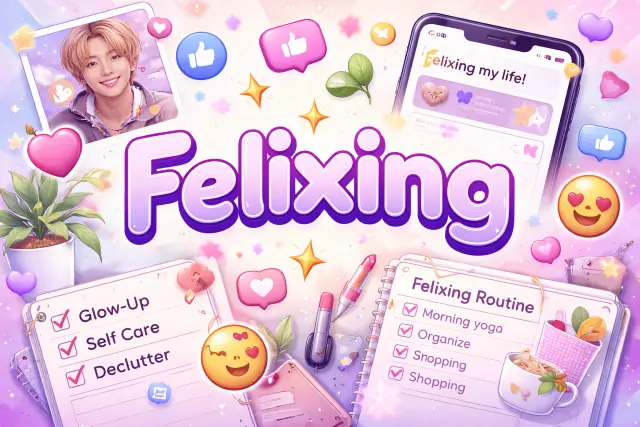
- A made-up verb used playfully, like “I’m felixing my life” meaning you’re tweaking, improving, or getting things together in a flexible way
- A username or brand-like handle that becomes a recognizable label on social platforms
- A trend term that stays intentionally fuzzy so people can use it in their own way
This “many meanings at once” pattern is common with new slang and neologisms, especially on fast-moving platforms where language shifts quickly. Studies on social media language evolution describe how platforms accelerate the creation and spread of new slang through repetition, trends, and community norms.
Why is Felixing suddenly showing up everywhere?
A big reason Felixing feels “everywhere” is how social platforms reward repetition. One popular creator uses it, others copy it, it turns into a hashtag or inside joke, and then it becomes searchable.
Another factor is that internet culture loves terms that are:
- Short
- Fun to say
- Flexible in meaning
- Easy to turn into captions and memes
You can see this pattern in how new words trend and get attention through engagement-driven content. When Oxford University Press selected “rage bait” as Word of the Year, the reporting highlighted how algorithms and engagement shape what spreads and what sticks in online language.
The most common origins of Felixing
Because Felixing is informal and community-driven, there are multiple “origin stories.” Some are stronger than others, but they all explain why the term feels familiar.
1) Felixing as a fandom-rooted identity word
One of the clearest real-world clues is that Felixing is used as a recognizable handle in K-pop fan communities. For example, there’s a YouTube channel branded as “Felix-ing” that posts Stray Kids-related content and has built a subscriber base around that identity.
In fandom spaces, names often become verbs, adjectives, or identity labels. People take an idol’s name and turn it into something that means “acting like them,” “being inspired by them,” or “living in that vibe.”
This interpretation also connects to how widely known “Felix” is in pop culture right now, especially with Stray Kids member Felix being frequently covered in mainstream fashion and beauty media.
2) Felixing as a playful mashup of “fixing” and “flexing”
Another reason Felixing works so well as a word is that it sounds like it could be a mashup:
- fixing (making something better)
- flexing (showing off, often online)
- Felix (a name people already recognize)
That “sounds-like” structure matters. A lot of internet slang sticks because it feels like it belongs in English even if it’s newly invented. Research on neologisms and word formation in social media shows that users constantly create new terms through blending, borrowing, and creative deviation.
So even if different communities explain Felixing differently, the word’s shape makes it easy to adopt.
3) Felixing as a modern “micro-improvement” idea
Several online explainers describe Felixing as a way of improving things without the pressure of perfection, more like ongoing adjustment than a final fix.
Even if you don’t treat those explainers as an official definition, that meaning makes sense in modern internet culture. People love language that captures a feeling like “I’m getting my life together… kind of… in progress.”
Felixing in real life: how people actually use it online
This is where Felixing gets interesting, because it’s used in multiple tones depending on where you see it. Sometimes it’s sincere. Sometimes it’s a joke. Sometimes it’s just a label.
Here are the most common usage styles.
Felixing as a vibe word
This is the “Felixing is a mood” version. People use it to describe a state of doing, improving, organizing, or resetting.
Examples you might see:
- “Cleaning my room and felixing my life today.”
- “New routine. New me. Felixing era.”
- “Felixing my skincare and my sleep schedule.”
In this form, Felixing is basically a soft, funny way to say “working on things” without sounding overly serious.
Felixing as a creator tag or identity
This is common on platforms like YouTube, TikTok, Instagram, and fan spaces. When a username becomes recognizable, the label can turn into a mini brand.
You’ll often see:
- Handles that include Felixing or Felix-ing
- Community comments like “Felixing posted again!”
- Fan edits or compilations attached to the name
Once a label becomes a recognizable “signature,” it spreads because people want to signal they’re part of the same community.
Felixing as a fandom-coded verb
In fandom language, words become shorthand. Felixing can mean “channeling Felix energy,” “doing something Felix would do,” or “being in a Felix-inspired mood,” depending on the community using it.
This is more common where Felix is already a known reference point, especially in K-pop circles where idol names frequently become slang-like expressions.
Felixing meanings by niche
Because FANSLY covers multiple topics, it helps to see how Felixing can show up in different categories depending on context.
| Niche | What Felixing tends to mean there | Example use |
|---|---|---|
| Entertainment and fandom | A Felix-coded vibe or community tag | “Felixing edits are the best” |
| Lifestyle | Resetting routines without perfection pressure | “Sunday felixing: laundry, planning, self-care” |
| Tech and productivity | Tweaking systems, optimizing workflows | “Felixing my phone setup and notifications” |
| Fashion and beauty | Curating a look, refining style, glow-up energy | “Felixing my wardrobe basics this month” |
| Social media culture | A flexible caption word that signals mood | “Not thriving, just felixing” |
The key takeaway is that Felixing is contextual. The same word can mean “fandom identity” in one post and “life admin glow-up” in another.
Why words like Felixing spread so fast
If you want to understand Felixing, it helps to understand the internet language engine behind it.
Social platforms create fast language loops
Online slang spreads through:
- Short-form video repetition
- Comment culture
- Copy-paste caption formats
- Hashtag clustering
- Influencer or creator amplification
Academic and research-backed discussions of emerging internet slang note that platforms like Twitter, TikTok, and Instagram speed up the creation and standardization of new expressions.
Ambiguity is a feature, not a flaw
A word like Felixing survives longer when it’s not too strict. If everyone can use it slightly differently, more people adopt it. That flexibility makes it useful as:
- A joke
- A vibe
- A label
- A caption filler that still feels meaningful
That’s why you’ll see multiple “definitions” floating around at the same time, and none of them fully cancels the other out.

Felixing vs fixing: what’s the difference people imply?
Even though Felixing looks like fixing, the implied tone is different. When someone says “fixing,” it can feel serious, final, or even stressful.
Felixing tends to feel like:
- Progress over perfection
- Improving without pressure
- A soft reset instead of a hard overhaul
- Humor mixed with effort
Some explainers explicitly frame Felixing as flexible improvement rather than a permanent final fix.
How to use Felixing naturally in your content (without sounding forced)
If you’re writing about Felixing for a blog audience, the safest and most natural approach is to treat it as a trending internet term with multiple meanings. That keeps the article honest and avoids locking it into a definition that might not match how readers see it.
Context patterns that feel natural
Felixing works best in these kinds of lines:
- “Felixing has become a catch-all word for…”
- “Depending on where you see it, Felixing can mean…”
- “Some people use Felixing as a mood word, others use it as a creator tag…”
Places it fits well
- Social media trends articles
- Entertainment and fandom explainers
- Lifestyle glow-up content
- Productivity and “get it together” routines
- Fashion and beauty refresh posts
And because your site covers all those categories, Felixing is the kind of term that can live across multiple content hubs without feeling random.
Common misunderstandings about Felixing
Felixing is trending partly because people keep asking what it means. Here are the biggest misunderstandings that cause confusion.
“It must be a real dictionary word”
Not necessarily. Most internet slang starts outside dictionaries. It becomes “real” through usage first, and formal recognition comes later, if it comes at all.
“It only means one thing”
Felixing is multi-meaning. That’s normal for new trend terms.
“It’s definitely tied to one person”
Sometimes it is, sometimes it isn’t. In some spaces, it’s clearly connected to Felix-related fandom identity and creator branding.
In other spaces, it’s used as a general vibe word.
Felixing FAQ
Is Felixing a slang word?
Yes, it functions like slang. It’s informal, community-driven, and shaped by how people use it online rather than an official authority.
Is Felixing connected to Stray Kids Felix?
It can be. Felixing appears as a recognizable handle and label in Stray Kids fan content spaces, and Felix as a public figure is widely covered in mainstream media.
Why do people say “Felixing my life”?
It’s a playful way to say they’re improving things in a relaxed, ongoing way, not aiming for perfection.
Is Felixing a trend or just a typo?
At this point, it’s used as a trend term by multiple sites and creators, and it also exists as a recognizable online identity label.
Will Felixing still be popular next year?
Trend words change fast, but terms that work as both a vibe word and an identity label tend to stick around longer than one-week memes.
Conclusion
Felixing is popular because it does a rare thing online: it’s flexible enough to fit many communities while still sounding like a “real” word. In fandom spaces, it can signal identity, creativity, and Felix-inspired energy. In lifestyle and productivity content, it often means you’re adjusting and improving things without the pressure of a perfect makeover. That’s why Felixing keeps showing up across entertainment posts, captions, comment sections, and trend explainers.
If you’ve been seeing Felixing everywhere, you’re basically watching internet slang form in real time. And that’s the fun part: the meaning isn’t only defined by one source, it’s defined by the people using it.