

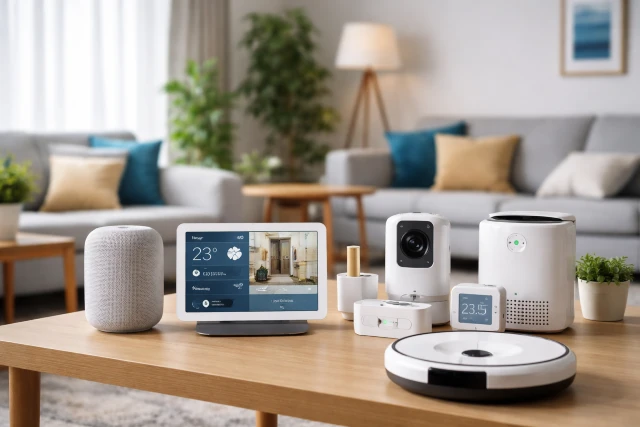
If you have ever walked into your home on a humid Singapore evening and wished the aircon was already cooled, the lights were perfectly set, and your delivery arrived safely behind a locked gate, you are exactly who smart home tech is built for. The exciting part is that smart living is no longer a “luxury condo only” thing. Today, Tech Gadgets Singapore is all about practical upgrades that make everyday life smoother, safer, and a little more fun, whether you live in an HDB flat, a condo, or a landed home.
Smart home gadgets have also gotten simpler to install and easier to control. You do not need a full renovation, and you do not need to be “techy.” In fact, the best smart setups in 2026 are the ones you barely notice, because everything just works in the background.
This guide breaks down the latest smart home gadgets that actually fit modern living in Singapore, how to choose the right ecosystem, what to prioritize for security and privacy, and how to build a setup that feels effortless.
What counts as a “smart home” in Singapore today?
A smart home is basically a home where key devices can be automated or controlled through your phone, voice, sensors, or schedules. The goal is not to turn your home into a sci fi movie. The goal is to reduce friction in daily life.
A modern smart home typically includes:
- A central control platform (Apple Home, Google Home, Amazon Alexa, Samsung SmartThings)
- Connectivity that can handle lots of devices (a strong router or mesh system)
- “Core” devices that add real value (security, lighting, climate, energy tracking)
- Automations that match your routine (arrival, bedtime, away mode, cleaning schedule)
Globally, especially in the industry of Tech Gadgets Singapore connected devices are exploding in number, which is why smart home standards and security matter more than ever. IoT Analytics estimates connected IoT devices reached about 18.5 billion in 2024 and projects around 21.1 billion by the end of 2025, with much higher totals by 2030.
Why smart home gadgets feel especially useful in Singapore
Singapore’s lifestyle makes smart home tech feel less like a novelty and more like a convenience upgrade.
Here is why it clicks:
- Heat and humidity: Climate control and air quality monitoring matter daily.
- Compact living: In many flats, one automation can affect multiple rooms.
- Busy routines: Work, school, errands, and travel make remote control and alerts genuinely helpful.
- Delivery culture: Cameras, smart locks, and door sensors reduce “missed parcel stress.”
- Strong digital infrastructure: High internet penetration and Smart Nation momentum support adoption.
That same Singapore context also means you need to think about practical details like door type, corridor rules, and cybersecurity labelling, not just “what looks cool.”
Tech Gadgets Singapore checklist before you buy anything
Before you start adding devices, take five minutes to set yourself up for fewer headaches later.
1) Pick a platform you will actually use
Most people do best with the ecosystem that matches their phone:
- iPhone household: Apple Home
- Android household: Google Home
- Mixed household: Google Home or SmartThings is often easier
- Voice control lovers: Alexa still has wide device support, depending on region
The trick is consistency. A “random mix” of apps is how smart homes become annoying instead of helpful.
2) Fix your Wi-Fi first (seriously)
Smart homes can have 20 to 60 connected devices faster than you expect. A good router or mesh system prevents delays, dropouts, and “device offline” messages when you need things to work.
Wi Fi 6 is commonly recommended for smart homes because it’s designed to handle many devices efficiently and reduce congestion.
Quick signs you need a better network:
- Your video doorbell lags or buffers
- Smart bulbs respond slowly
- Some rooms have weak signal
- Devices randomly disappear from apps
3) Prefer devices with clearer security standards
Singapore’s Cyber Security Agency (CSA) runs the Cybersecurity Labelling Scheme (CLS) for consumer smart devices, which rates devices by cybersecurity provisions to help consumers make informed choices.
This is not about paranoia. It is about buying devices that are more likely to be maintained and updated.
4) Know your home constraints
In Singapore, the “best gadget” is the one that fits your home without creating renovation drama:
- Digital locks need to match your door type and fire safety requirements
- Older flats may have weaker Wi-Fi coverage in some corners
- Some sensors do better when you can place them without drilling
Smart home standard you will hear everywhere: Matter
If you have ever bought a smart gadget and discovered it does not work with your existing setup, you understand why Matter is a big deal.
Matter is a smart home connectivity standard designed to improve interoperability so devices from different brands can work together more smoothly.
Why this matters for your shopping:
- You are less locked into one brand forever
- Adding devices later is easier
- Setup tends to be simpler across platforms
Matter has been improving through updates, including onboarding upgrades like multi device QR codes and NFC style “tap to pair” features discussed by major tech outlets.
Practical tip: If you are starting fresh, choosing “Matter compatible” devices is one of the simplest ways to future proof your smart home.
Latest smart home gadgets that actually feel modern in 2026
Let’s talk gadgets that add real value, not just “cool factor.”
Tech Gadgets Singapore: Smart home hubs, speakers, and displays
A hub is like your home’s traffic controller. Some platforms use a dedicated hub, while others use a speaker, display, or router.
What they’re great for:
- Controlling multiple devices in one place
- Running automations locally (faster, more reliable)
- Acting as a bridge for protocols like Thread or Zigbee, depending on device
A smart display in the kitchen or living room can be surprisingly useful for:
- Live doorbell view
- Timers, reminders, and routines
- Quick control for lights and aircon scenes
If you hate talking to devices, do not worry. You can build a great smart home without voice control. Think of the hub as a reliability tool, not a “talking house” requirement.
Smart lighting that feels premium without rewiring everything
Smart lighting is often the gateway gadget because the payoff is immediate.
Modern smart lighting options include:
- Smart bulbs (easy swap)
- Smart switches (best for ceiling lights and long term convenience)
- Motion sensors (automation magic)
- Light strips for mood and ambience
Best “Singapore use cases”:
- Entry lighting: Lights turn on when the door opens after 7 pm
- Night mode: Soft hallway light when motion is detected
- Heat friendly ambience: Warmer lighting in the evening helps your home feel calmer
If you are choosing between bulbs and switches:
- Choose bulbs if you rent or want zero wiring
- Choose switches if you want the cleanest everyday experience for family members who still press switches
Climate control upgrades: aircon, fans, and dehumidifying support
In Singapore, climate comfort is not optional. It is daily life.
Smart climate gadgets worth considering:
- Smart AC controllers (IR blasters) for systems without native smart features
- Smart thermostats or temperature sensors for room level control
- Smart ceiling fan controllers (where compatible)
- Smart dehumidifiers and humidity sensors
Real talk: The best climate automation is a simple one:
- When you are 10 minutes from home, cool the living room
- At bedtime, set a quiet fan mode and dim lights
- When nobody is home, switch to energy saving settings
On energy savings: results vary, but credible discussions note that smart thermostats can reduce HVAC costs, with organizations like the U.S. EPA estimating meaningful savings for approved devices, while also warning that user behavior affects outcomes.
For Singapore, the bigger “savings” often come from smarter habits:
- Not cooling empty rooms
- Using schedules instead of manual blasting
- Pairing fans with moderate aircon settings
Air quality and health focused gadgets for modern living
If you live near a busy road, have pets, or are sensitive to haze season, air quality devices feel like a quality of life upgrade.
Popular options:
- Air purifiers with smart sensors
- PM2.5 monitors
- CO2 monitors for ventilation awareness
- Leak detectors for kitchens, toilets, and laundry areas
Why CO2 monitors are trending: People are realizing that “stuffy” air can mean poor ventilation, especially in rooms with closed windows and strong aircon usage.
Simple routine that works:
- If CO2 rises above your comfort threshold, run ventilation or open windows briefly
- Automate purifier speed based on PM2.5 levels
- Track patterns: cooking time, sleeping comfort, and humidity swings
Smart security that fits HDB, condo, and landed homes
Security is one of the strongest reasons people invest in smart home tech. The key is choosing layers that match your lifestyle.
Video doorbells and smart cameras
Modern doorbells and cameras usually offer:
- Motion detection zones
- Person detection (depending on model and subscription)
- Two way talk
- Cloud recording or local storage (model dependent)
Practical placement tips:
- Doorbell at the main entrance
- A camera facing the living room entrance if you want indoor monitoring
- Optional balcony or service yard coverage if relevant
Privacy tip: If you add indoor cameras, set them to “off at home” and “on when away.” That one automation makes many people feel more comfortable.
Smart locks and digital door locks
Digital locks are hugely popular in Singapore, but you should be aware that installation requirements can apply. Several Singapore based sources report that HDB updated rules around digital locks, including certification requirements tied to fire safety standards, so homeowners should ensure locks meet relevant standards and certification.
If you are choosing a lock, prioritize:
- Reliable unlocking methods (PIN, fingerprint, key)
- Battery life and low battery alerts
- Local support and warranty
- Door compatibility (gate, main door, thickness, fire rated requirements where applicable)
Sensors that quietly do the heavy lifting
If you want “modern living” without complexity, sensors are the secret weapon:
- Door and window sensors for alerts and automations
- Motion sensors for lighting scenes
- Vibration sensors for cabinets or safes
- Water leak sensors for peace of mind

A simple security automation many people love:
- Away mode turns off lights, arms sensors, and enables camera alerts
- Home mode disables indoor camera alerts and switches lighting to comfort scenes
Smart cleaning gadgets: robot vacuums that actually feel smart now
Robot vacuums have improved massively, especially in:
- Mapping accuracy
- Obstacle avoidance
- Multi floor support
- Self emptying docks
In Singapore homes where dust and hair build up quickly, a robot vacuum run 3 to 5 times a week can keep floors consistently clean with less effort.
Smart routine that works well:
- Run a quick clean after lunch when the house is quieter
- Run a deeper clean on weekends
- Trigger a cleaning session when you leave home, so you do not hear it
If you have pets, look for:
- Strong suction plus anti tangle brushes
- Better edge cleaning
- Easy filter replacement
Smart kitchen and utility gadgets for daily convenience
You do not need to turn your whole kitchen into a gadget showroom. A few upgrades can cover most needs.
Useful categories:
- Smart plugs for kettles, coffee machines, and lamps (with safety awareness)
- Smart multi cookers that support scheduling and remote monitoring (model dependent)
- Smart smoke and heat detectors (where compatible)
- Smart water leak sensors under sinks
- Smart power monitoring plugs to track high consumption appliances
Safety note in plain language: Anything involving heat should be used responsibly. Smart control is not a replacement for supervision. The goal is convenience with common sense.
A quick comparison table: which smart gadgets give the fastest lifestyle upgrade?
| Gadget Category | Best For | Effort Level | Why It Feels “Modern” |
|---|---|---|---|
| Smart lighting + sensors | Comfort, routines | Low to Medium | Automatically matches your day |
| Smart AC control | Daily comfort | Low | Stop cooling empty rooms |
| Video doorbell | Deliveries, security | Medium | See and respond instantly |
| Digital lock | Convenience | Medium | Keyless entry reduces friction |
| Leak sensors | Peace of mind | Low | Prevent small issues becoming big ones |
| Robot vacuum | Clean floors | Medium | Consistent cleanliness with less effort |
How to build a smart home setup step by step (without overspending)
If you buy everything at once, you will waste money and get overwhelmed. A smarter approach is building in layers.
Step 1: Start with one “high impact” area
Pick one:
- Entryway: lock, door sensor, lighting
- Living room: lighting scenes, AC control
- Bedroom: sleep lighting + climate routine
- Cleaning: robot vacuum
Step 2: Add sensors before more “big gadgets”
Sensors make your existing devices smarter.
Examples:
- Motion sensor + lights = hands free lighting
- Door sensor + AC = turn off cooling when the balcony door is open
- Leak sensor + phone alerts = faster response
Step 3: Build 3 routines that match real life
These routines usually deliver the biggest “wow” with the least complexity:
- Good Morning: gentle lights, comfortable temperature, music if you like
- Leaving Home: turn off non essentials, enable security alerts, start robot vacuum
- Bedtime: dim lights, quiet climate settings, lock confirmation
Cybersecurity and privacy for smart homes in Singapore
Smart home devices are connected devices, and connected devices deserve basic protection. Singapore’s CSA Cybersecurity Labelling Scheme exists for exactly this reason, to make security provisions clearer and improve cyber hygiene.
Also, Singapore’s PDPA sets rules around collection, use, disclosure, and care of personal data, which is relevant when devices collect audio, video, or usage data.
Simple actions that make a huge difference:
- Use unique, strong passwords for your Wi-Fi and smart accounts
- Turn on two factor authentication where possible
- Keep firmware updated
- Disable features you do not use (for example, remote access you never touch)
- Put guest devices on a guest network if your router supports it
You do not need to be a cybersecurity expert. You just need a few good habits.
Common questions people ask before buying smart home gadgets in Singapore
Do I need to renovate to install smart home gadgets?
Not necessarily. Many gadgets are plug and play: smart bulbs, smart plugs, sensors, cameras, and robot vacuums. Switches and some locks may require professional installation, depending on your door and wiring.
Will smart home gadgets work if Wi-Fi goes down?
Some devices can still run locally depending on the platform and device type, but many features rely on Wi-Fi. That is why a stable router or mesh system is worth prioritizing early.
Is Matter really important, or just marketing?
Matter is important because it aims to reduce compatibility mess between brands and platforms. It’s not perfect, but it’s one of the biggest real improvements in smart home buying confidence in recent years.
Are smart thermostats relevant in Singapore?
If you use aircon often, smart climate control and automation can help reduce waste and improve comfort. Savings vary, and behavior matters, but smarter schedules and room based control can still be valuable.
Conclusion: building modern living with Tech Gadgets Singapore
Modern smart homes are not about filling your flat with gadgets. They are about making your home respond to you, quietly and reliably. When you approach it step by step, starting with strong Wi-Fi, picking one ecosystem, and choosing devices that solve real daily pain points, the results feel genuinely life improving.
The best part is that Tech Gadgets Singapore has matured into a space where you can mix convenience, comfort, security, and health in a way that fits how Singaporeans actually live. Start small, build routines you will really use, and prioritize trustworthy devices with better security practices. Your future self will thank you every time you walk into a home that already feels ready for you.
Modern smart homes are built on ideas from the Internet of Things, which is why compatibility and security matter just as much as convenience.